01/04/2026
PropheSea has been selected by the European Space Agency (ESA) to develop NovaSight, an innovative service that forecasts solar production in the ultra-short term with unprecedented accuracy. Thanks to advanced satellite data, companies can respond faster and smarter to fluctuations in energy production and energy prices.
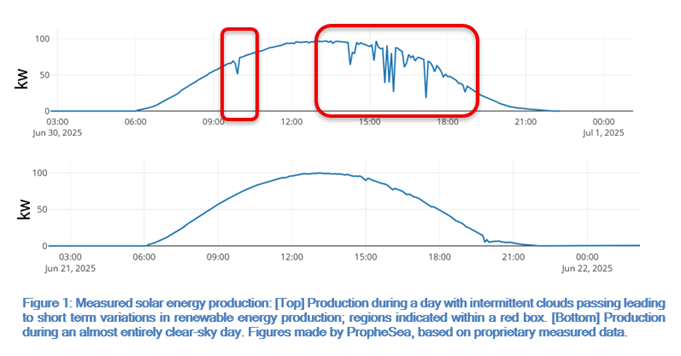
Smart control of solar panels is not new. Yet accurately forecasting solar production remains a challenge, because various weather factors influence it. Passing cloud formations, for example, can cause major fluctuations in the output of solar panels within just a few minutes.
Those fluctuations not only affect companies with their own generation, but also the energy market, where prices now vary in the short term. The faster and more accurately one can anticipate, the greater the financial benefit.
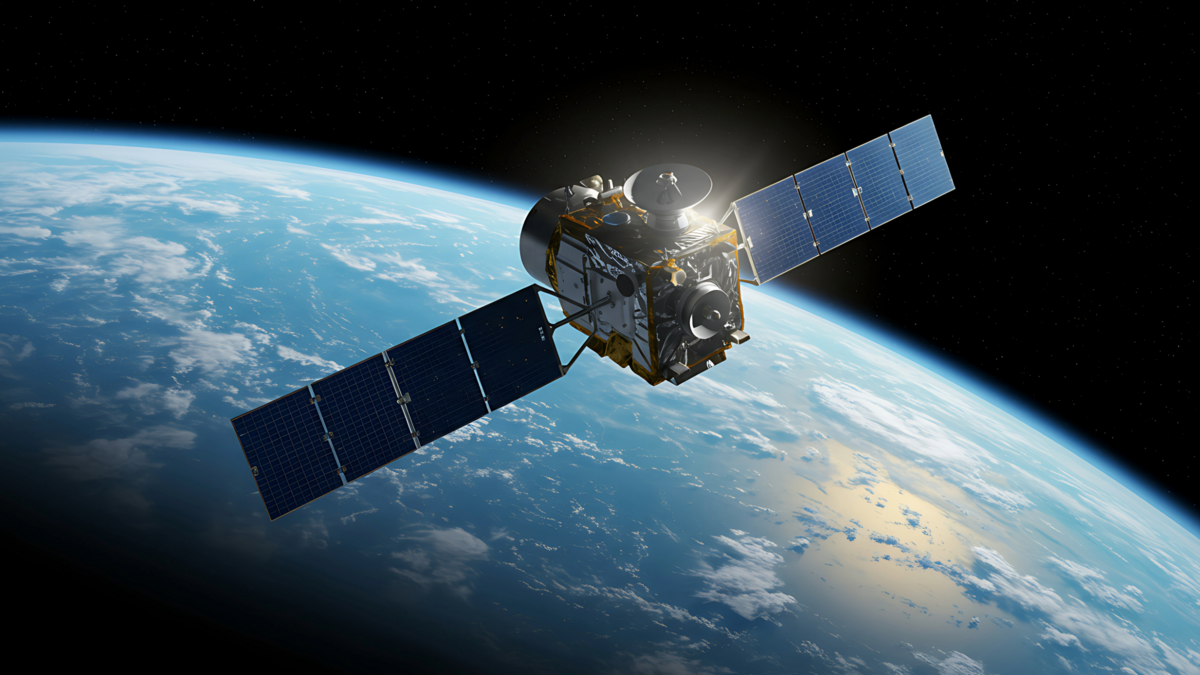
To address this problem, PropheSea is developing NovaSight, a new service that forecasts solar production based on data from the Meteosat Third Generation (MTG) Imager-1. This satellite delivers images updated every 2.5 minutes, with a resolution of 2 kilometers.
“Energy prices are no longer traded per day or per hour, but per quarter-hour. Weather directly influences solar production, and therefore also the price. If companies truly want to benefit from this, they must be extremely flexible in responding to changes. With NovaSight, we can go further than existing nowcasting systems,” says Tomas Van Oyen, founder of PropheSea.
Balance responsible parties can also benefit from this technology, as they are responsible for grid stability and the balance between injection and offtake of solar production.
NovaSight will be available as an API that can be integrated into existing energy systems. In addition, the technology will be embedded in Foresight, PropheSea’s smart grid platform that aligns energy production and consumption of various assets—such as solar panels, charging stations, heat pumps, and batteries—with the energy price.
“The NovaSight project fits perfectly within Foresight’s strategy. Unlike traditional energy management systems that only react, we actively forecast. This allows our customers to plan better, optimize their production, and reduce their energy costs,” says Van Oyen.
The technology will be tested at the Transfosite in Zwevegem, where Foresight already smartly controls several assets, including solar panels, charging stations, a heat pump, a combined heat and power unit, and a large battery. Thanks to NovaSight, the alignment between production and consumption will be further optimized, leading to lower energy costs, greater local consumption, and lower CO₂ emissions.
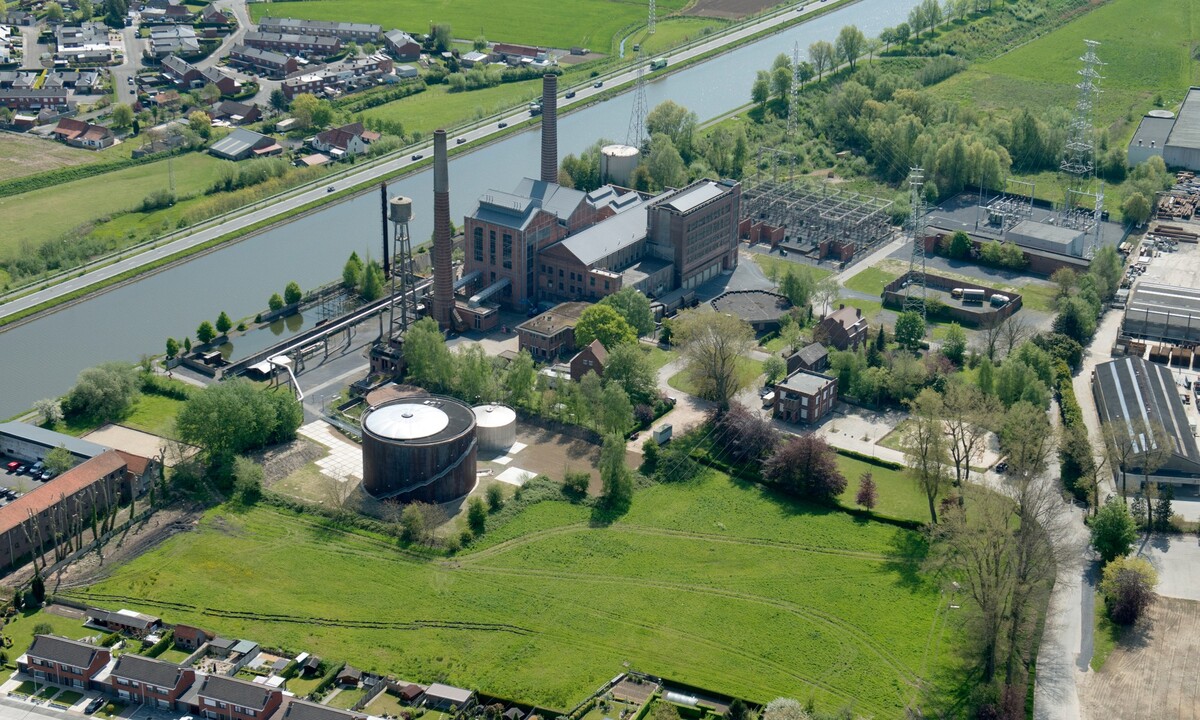
“Transfo in Zwevegem is a unique test environment in Flanders where innovative companies can test new applications,” says Dominiek Vandewiele, energy transition program manager at Intercommunale Leiedal. “PropheSea is very welcome to put theory into practice there, so that problems can be detected quickly. NovaSight can be tested there on a real, working, smart electricity system. We are very curious about the benefits of continuously aligning solar production with the energy balance in Transfo’s smart grid.”